ServicesWater Softeners
Mesa Water Softener Installation Built for the Long Haul
Hard water builds crust on fixtures and wears on your water heater every day. We test your water at no cost, size a softener to your home and how you use water, and show you the cost to buy it and to run it for years.
A softener that earns its keep
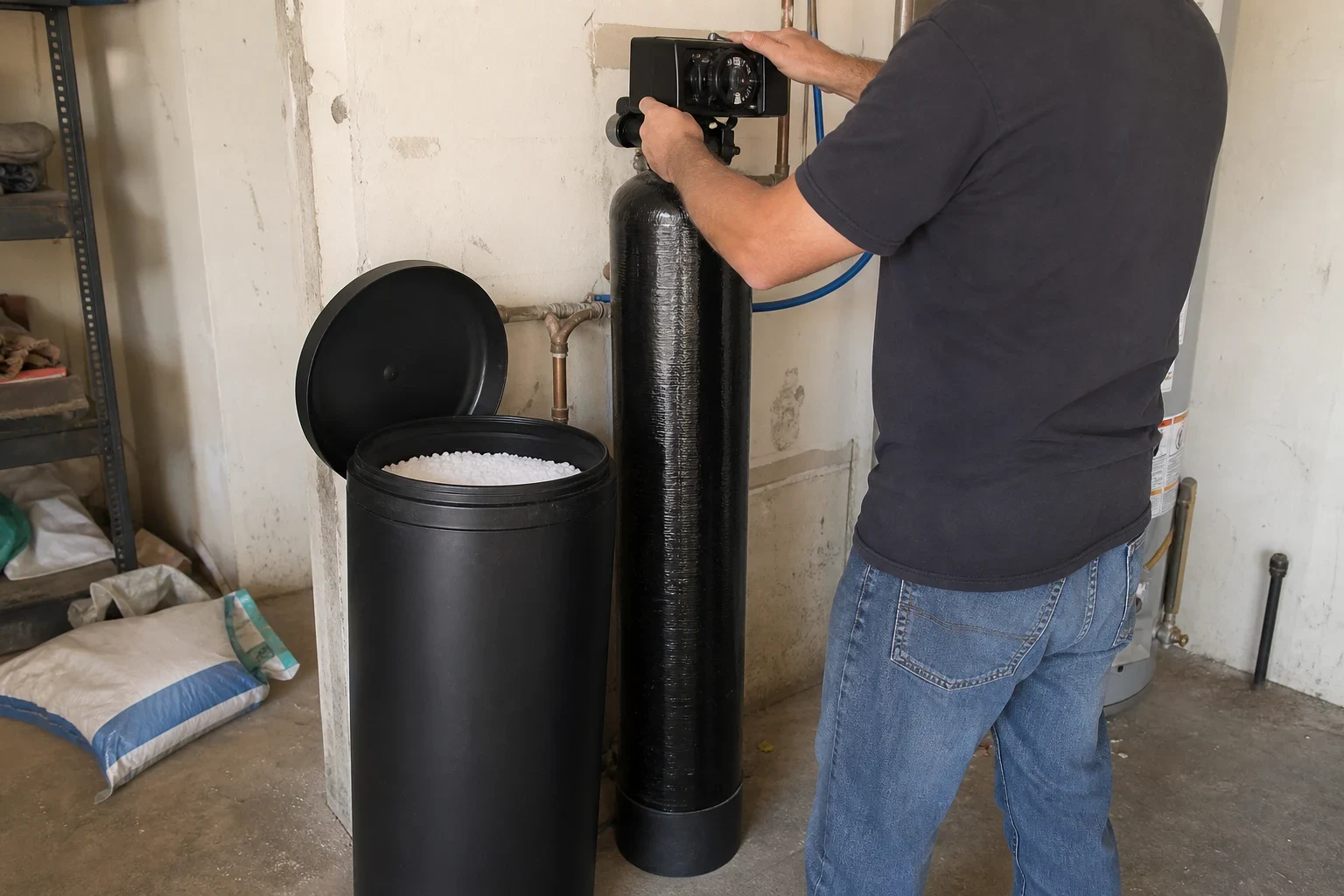
Inside a softener, a tank of resin beads grabs calcium and magnesium as water flows through and trades them for sodium or potassium. What comes out the other side rinses clean, dries without a white film and stops laying down scale in your pipes, water heater and appliances.
The sticker price is only part of the story. Pick a unit with too little capacity and it cleans itself over and over, using up salt and water each time. Pick one far bigger than you need and you pay extra at the start for capacity that never earns its money back. We size yours from your test results and how much water your household uses, then walk you through the yearly salt and upkeep so the choice still makes sense ten years from now.
Water across the East Valley tends to run hard, so most homes notice the change quickly. If your test points to taste or chlorine as the bigger issue, we will tell you, and whole-home filtration may be the better fit.
What your softener install includes
- Testing first, models second
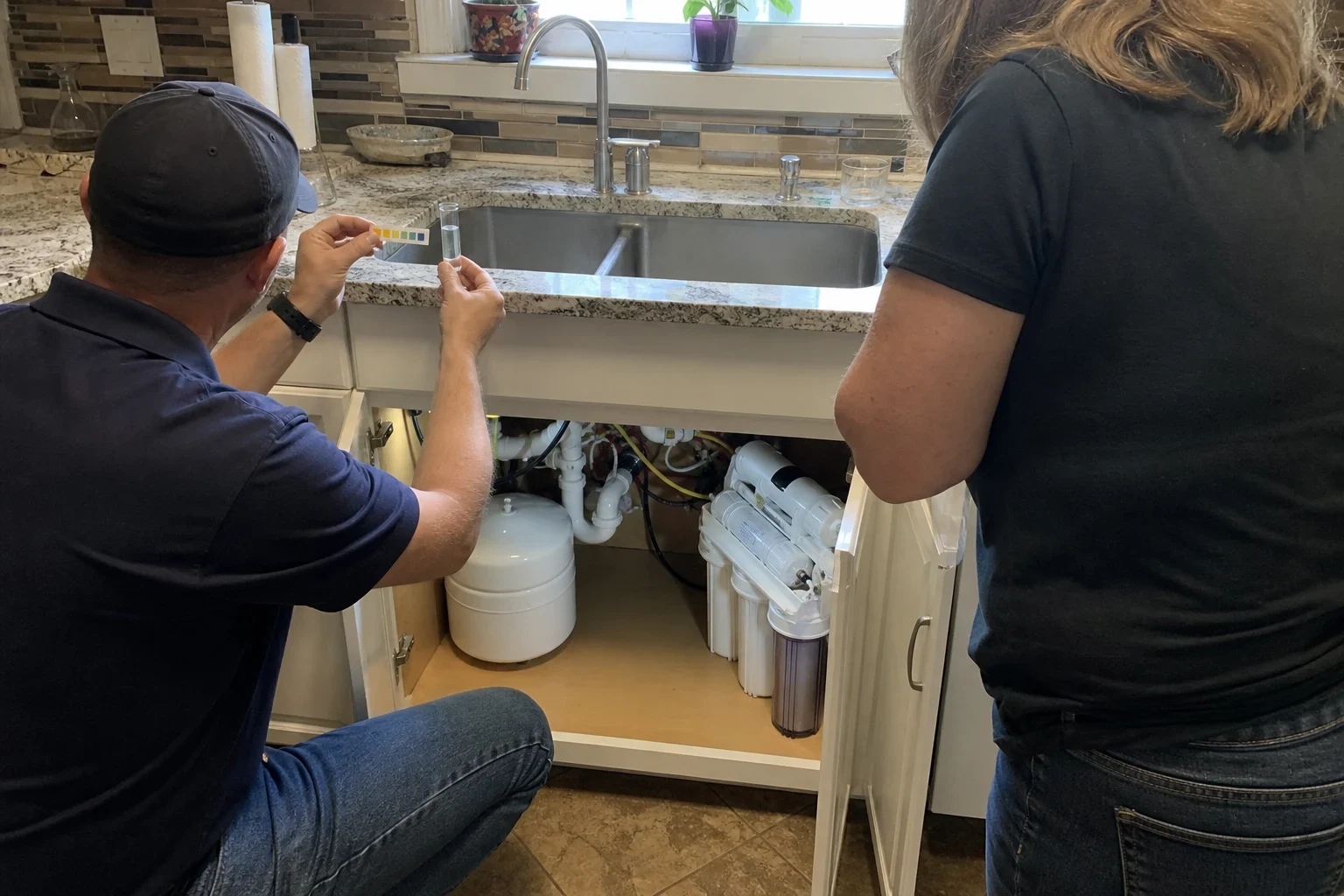
- Before any model comes up, we measure hardness and take a few other readings from your tap. You pay nothing for the test and owe nothing afterward.
- Sizing you can check yourself
- We match grain capacity to your hardness and how many people live in your home, and we show you the figures so you can see why one size fits better.
- Installation in the price
- Installation comes with our water treatment systems. Your partner plumber connects the unit to an existing softener loop or adds a new loop if your home needs one.
- Bypass valve and drain line
- Every system gets a proper drain line with an air gap and a bypass valve. Turn the valve and water skips the softener while the rest of the house keeps running normally.
- Programming and a quick lesson
- We set the regeneration schedule to suit your water and show you how to add salt, check the level and work the bypass.
- 5-year warranty on installation and labor
- For five years, if a connection we made starts leaking or works loose, the labor to fix it is covered.
Signs a softener could help your home
Chalky buildup on faucets and showerheads
That white residue is mineral scale. It plugs aerators and spray nozzles and returns a few days after you clean it.
Spotted dishes and hazy shower doors
Hard water leaves dried spots that dish soap and glass cleaner have a hard time removing.
A water heater that pops and crackles
Minerals settle into a hard layer at the bottom of the tank. Heat has to work through it, so the burner runs longer and the tank gets noisy. Over time, that shortens the heater's life.
Lather that fades quickly
Calcium and magnesium bind with soap before it can foam. You use more shampoo and laundry detergent, and your skin may still feel filmy after showering.
An aging softener that can't keep up
When you keep adding salt and the spots still come back, the resin could be spent or the valve could have failed. We'll give you a straight answer on whether fixing it or replacing it is the better deal.
What to expect from your softener install
- 1
A call and your free test
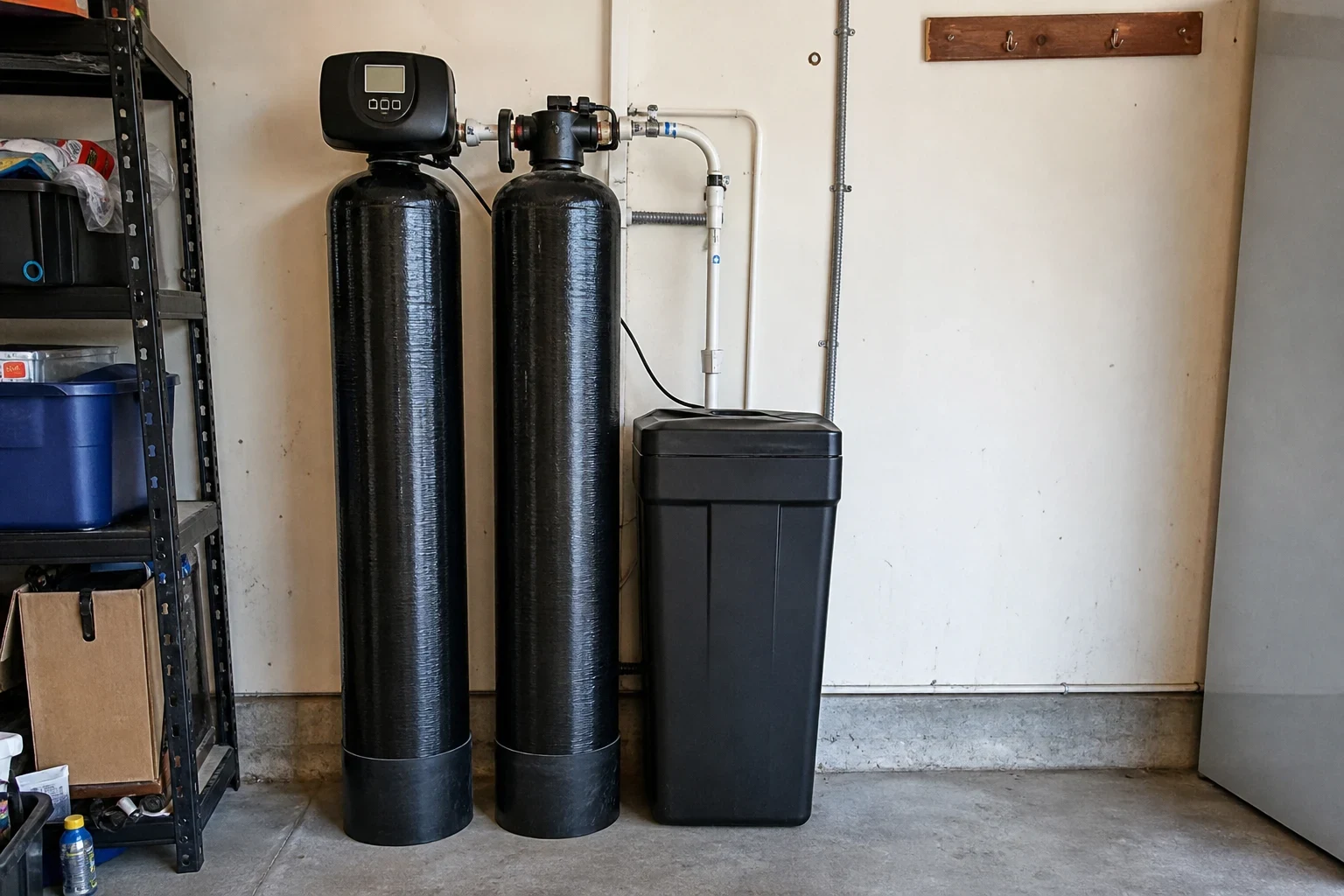
When you call, we book a time to test your water and see where the softener would sit. Plenty of local homes already have a softener loop in the garage, which makes the job simpler.
- 2
An installed price to compare
You get the installed system price by phone, plus expected salt use and the upkeep the unit needs. Compare it with any other option before deciding.
- 3
Installation day
Your partner plumber turns off the water, hooks up the softener, runs the drain line and sets the bypass. Most jobs take a few hours, and the area is cleaned before anyone goes.
- 4
Setup and first regeneration
We add salt, program the valve and run the first cycle. Then we test the softened water so you can see the hardness come down.
What moves the price of a softener
Two softeners with similar price tags can cost very different amounts to own. We look at the purchase price, the install and what you will spend on salt and service over the life of the unit. Here is what changes the numbers.
- Grain capacity
- Harder water and bigger households need more capacity. Getting this right keeps regeneration cycles, and salt costs, in check.
- Metered or timer valve
- A metered valve regenerates based on actual water use, which usually saves salt and water compared with a fixed timer. It costs a bit more up front and tends to pay that back.
- Your plumbing setup
- An existing loop with a nearby drain and outlet is the simplest install. No loop, a long drain run or no outlet nearby adds plumbing time.
- Add-on treatment
- Some homes add a carbon filter, or reverse osmosis at the kitchen sink for drinking water. Each one gets its own line in your quote, so you decide which pieces are worth it to you.
Common water softener questions
Something not covered here? (480) 914-1657
How much salt does a softener go through?
That comes down to your hardness, water use and valve type. A correctly sized softener with a metered valve uses clearly less than an oversized or timer unit. Your quote includes a salt estimate so it's part of the cost you weigh.
How many years will a softener last?
With regular care, a softener can keep working for many years. The resin breaks down slowly, and the valve is usually the first part to need service. We explain the expected upkeep before you buy, so nothing catches you off guard.
Is softened water safe to drink?
For most people, yes, though it does carry a little added sodium. If that worries you, you can use potassium in place of salt, or add a reverse osmosis system at the kitchen sink to take it out of your drinking water.
Who installs the softener?
A partner plumber does the physical work: connecting the unit to your plumbing, running the drain and adding the bypass valve. We stay your contact throughout, from the first call to the final hardness test.
How long is the water off during the install?
Just part of the visit. Water is shut off while the softener is connected, and most installs are done within a few hours. With the bypass set, your faucets run again before the first regeneration is even complete.
Is a softener what I need, or would a filter do?
The free water test settles that. Softeners deal with hardness, and filters deal with taste, odor and chlorine. If your results call for a filter, we'll tell you and explain the reason.
Find out what a softener would cost you over time
We test your water for free, size the softener to your home and price it installed, with salt and upkeep included in the picture. Our 3 five-star Google reviews came from homeowners who got exactly that.